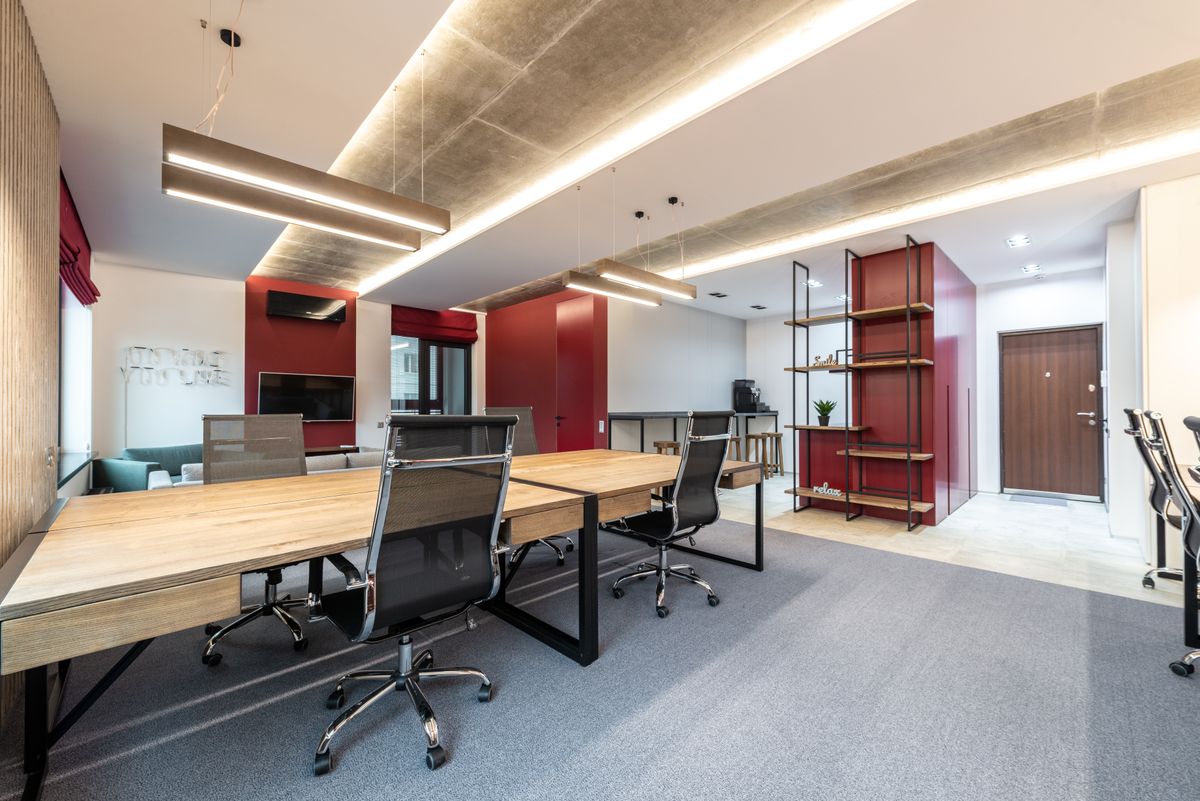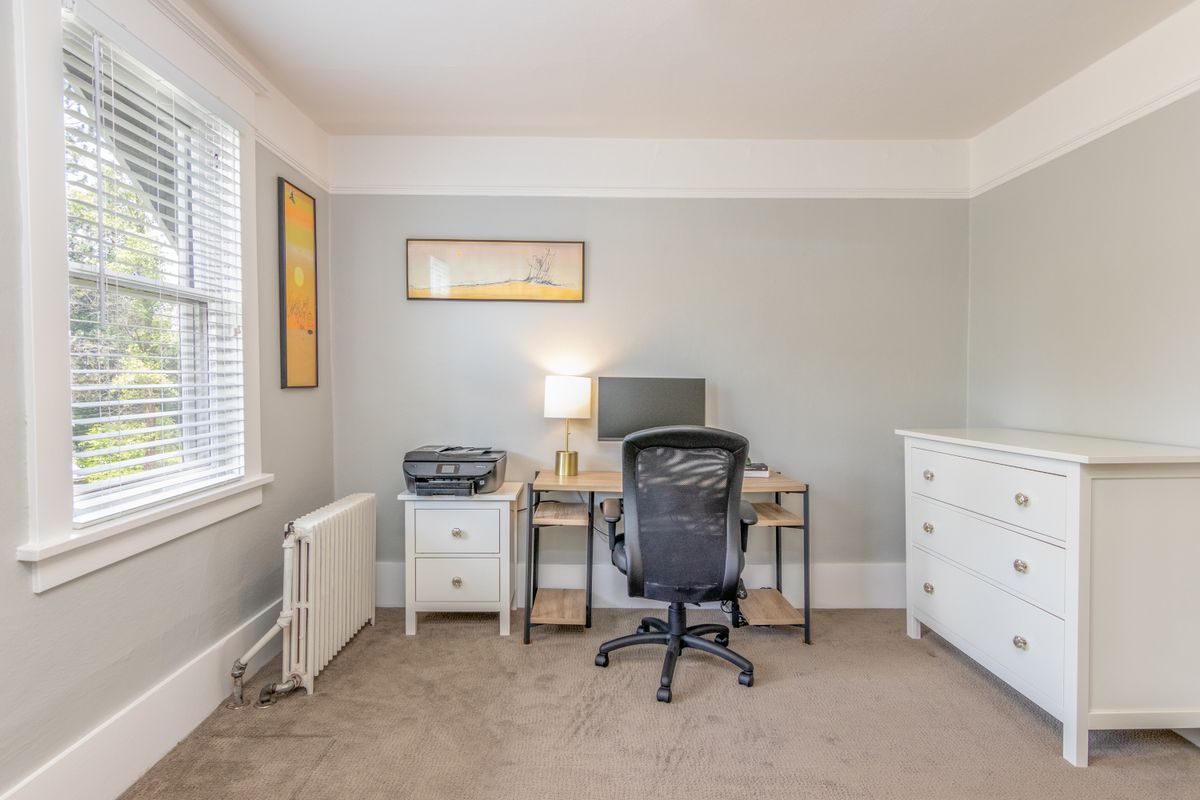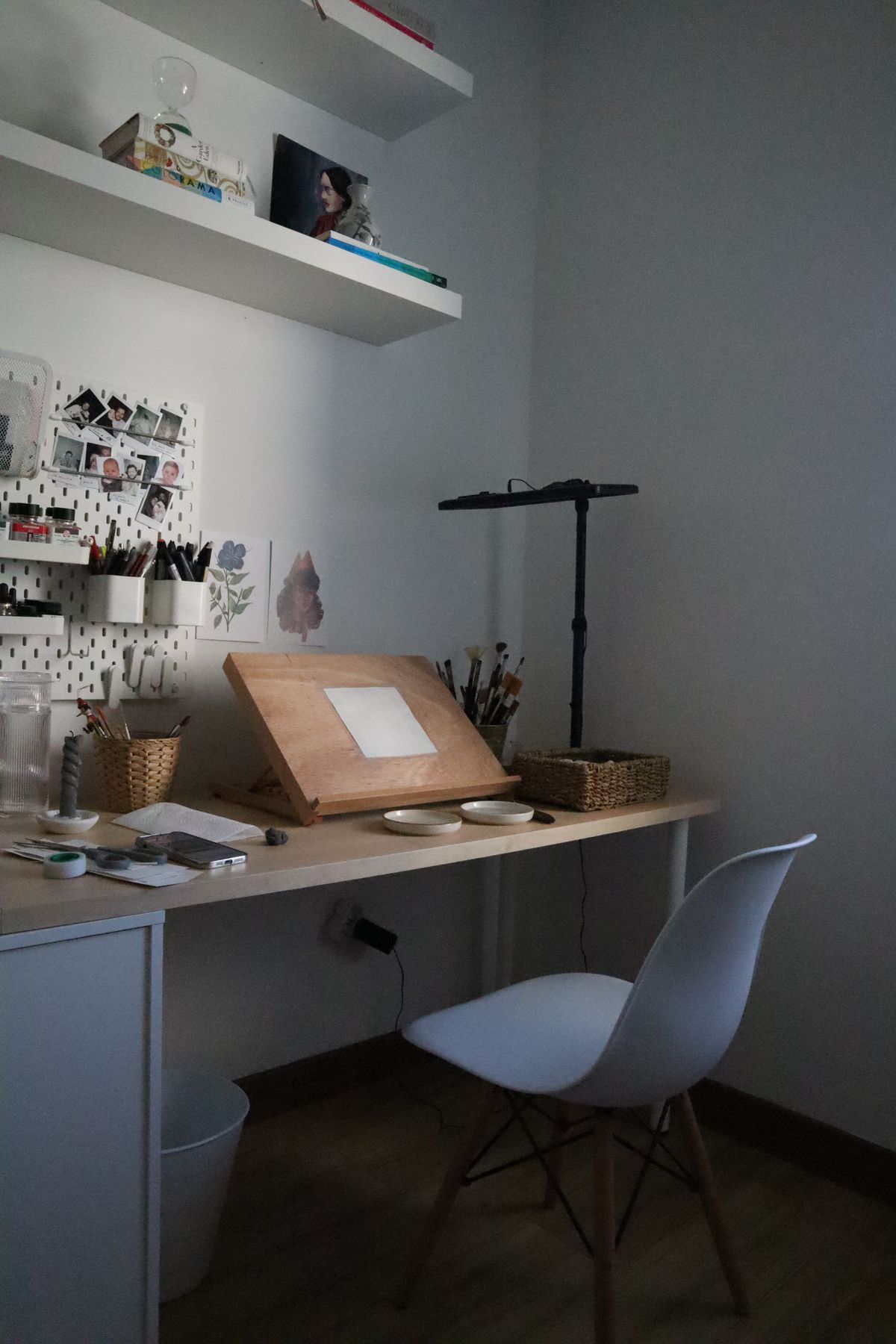
The space beside a doorway is easy to dismiss because it does not resemble a room intended for an office. Yet a short wall can accommodate a compact writing or laptop station. The limiting dimension is rarely the wall alone. It is the space occupied by the open door, the chair and anyone walking through.
Open the door as far as it normally goes and mark that sweep on a rough floor plan. Include the handle, which can project beyond the door panel. Next place a chair where you would sit. Try entering the room carrying a laundry basket or bag. If the route only works with the chair tucked in, it will be blocked during the very time the station is in use.
Decide what the surface must carry
A narrow station becomes more plausible when it has one clear job. A laptop and a sheet of notes need a different footprint from a large monitor, full-size keyboard and paper files. Lay out the equipment at its actual size. Do not count on the wall to make a shallow desktop deep enough for a screen that requires a substantial stand.
Open supports can preserve knee space, while drawers may reduce the usable width beneath a modest top. Check the dimensions between the legs or panels. A compact desk with bulky side storage can have less sitting space than its overall measurements suggest. The chair must fit the opening when you work, not merely when it is stored.
Watch the projections
Wall-mounted storage should not put a sharp shelf corner into the doorway or directly above the point where you stand up. Hooks holding bags can extend surprisingly far into a passage. Keep the route clear rather than treating every unused inch of wall as storage capacity.
A wall-fixed desk also depends on the wall construction, suitable fasteners and the product's installation requirements. A decorative shelf is not automatically a work surface. If you cannot confirm the intended use and support, choose a freestanding desk or seek qualified installation help instead of improvising brackets.
Power access may decide the layout. A charger cable crossing the doorway defeats the advantage of using that wall. Check for an accessible outlet on the same side, without pinching cords behind the door or placing them under a rug. Maintain access to any switches, controls or required exits.
Before ordering, leave the proposed space marked for a day. Watch the ordinary movements through it. A little-used corner beside an inward-opening door may work beautifully; a busy connection between two rooms may not. The room's traffic tells you more than the label slim desk can.