Put the things you need to scan into three piles: loose pages, bound material and small or awkward originals. The largest pile gives you a starting point. The most delicate item tells you what must never be forced through the wrong mechanism. This quick sort is more revealing than a comparison of maximum resolution figures.
Loose pages reward a repeatable feed path
A document scanner with an automatic feeder can be convenient for regular packets of ordinary paper. Check supported page sizes, thicknesses and the ability to capture both sides. A receipt longer than a normal page may need a special mode, while a small card may need a different path or an approved carrier sheet. Those capabilities should be stated for the exact scanner rather than inferred from the width of its opening.
The preparation work still counts. Staples, sticky notes, curled edges and mixed-size sheets can require sorting before a batch is loaded. If your documents arrive in that condition every day, the scanner's headline feed speed will not describe the time required to finish the job. Consider how easily you can pause, add a missed page and correct the order.
Books need room to open
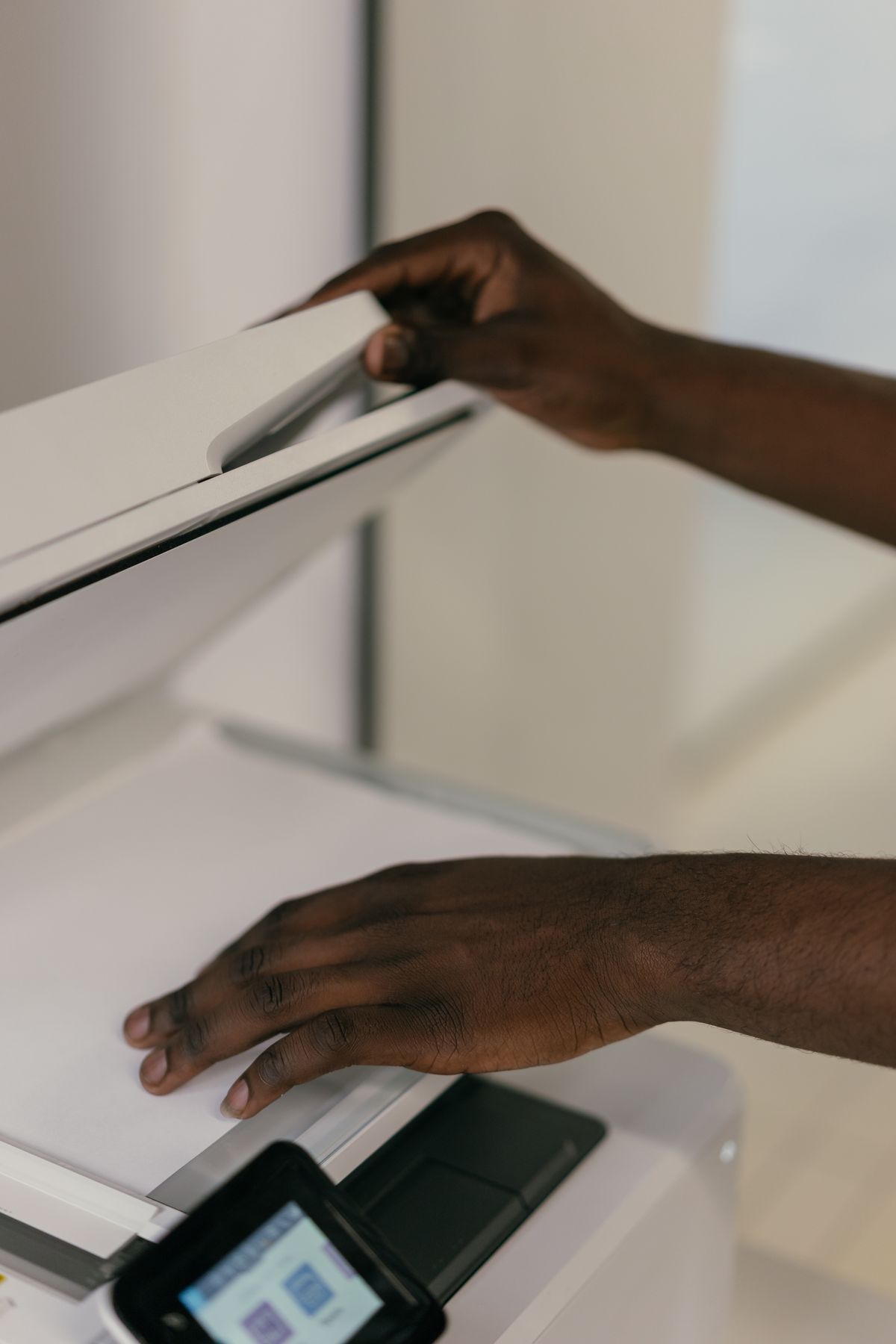
A flatbed avoids pulling an original through rollers and accommodates many photographs or fragile pages. Its usable glass area and lid arrangement matter more than the case size. A bound volume may not lie flat near the spine, and pressing hard to flatten it can damage the book or the scanner. An overhead camera can be useful for bound material, provided lighting, focus and page curvature are handled carefully.
A phone may also be sufficient for occasional capture. Use it where the result is readable and acceptable for the purpose; do not assume that automatic perspective correction preserves every detail accurately. For artwork, fine print or documents with faint marks, compare the output at the size you will actually use.
Decide what a finished scan must do
Saving an image is different from producing a searchable, organized document. Check available file formats, optical character recognition and the process for naming or combining pages. Searchable text can contain mistakes, so verify important names, amounts and reference numbers against the visible original. Keep sensitive documents out of an online processing service unless its use fits your privacy requirements.
A sensible trial includes one easy page and one difficult original. Review fine text, page edges, back sides and the final file size. There is no benefit in capturing a routine receipt at an enormous resolution if it makes filing cumbersome without improving readability. Choose the scanner that handles the material and produces the file you need with the least avoidable handling.