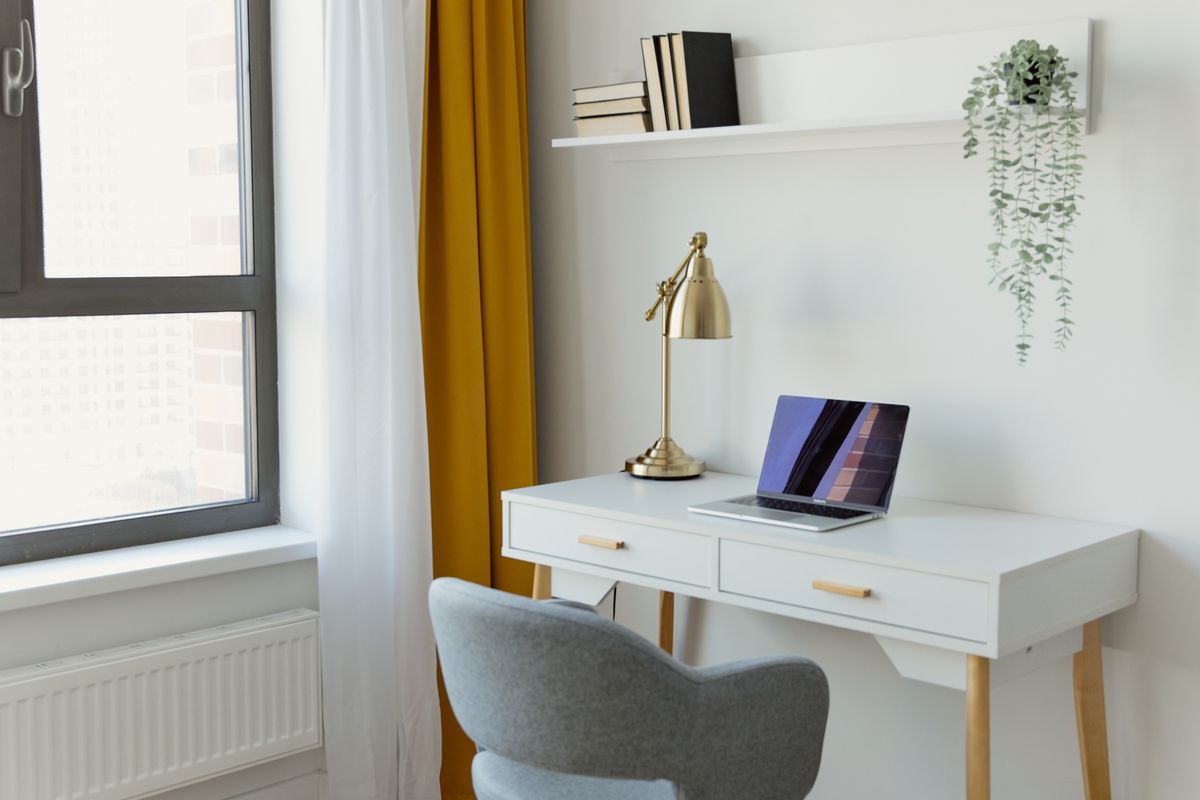
A desk facing a window often wins the room-planning argument before anyone opens a laptop. It gives an otherwise awkward wall a purpose and leaves the center of the room free. Whether it works for a full afternoon is a separate question. The useful test is what happens at the screen, not how the arrangement looks from the doorway.
Put the display roughly where it would sit and look at a familiar document. Repeat this when sunlight reaches that side of the building. A bright outdoor scene immediately behind a dark monitor can make the document harder to view comfortably. Sun coming from behind the chair may instead appear as a reflection on the screen. Both problems can change with the hour and season.
Try the side-on position
Turning the desk so that the window is beside the screen is often worth testing. This can keep direct light out of the viewing direction without losing daylight in the room. It is a starting position, not a promise that every reflection will disappear. A glossy display, a neighboring glass building or a pale wall opposite the window can still create a bright patch.
Adjustable shades let you change the light rather than permanently blocking the view. Check that you can reach their controls from the floor without stretching over equipment. Do not plan an arrangement that depends on dangling blind cords near a child's work or play area; use the window covering's safety instructions.
A windowsill is not spare desk space
Leave the opening mechanism clear. A casement handle may need more room than it appears to, and an inward-opening sash can sweep across the back of a monitor. You should still be able to open, clean and close the window without dismantling the workstation. Where a window serves an emergency escape function, keep its access unobstructed.
Look below the sill as well. A radiator, heater or ventilation grille changes where furniture and cables can go. Follow the equipment's clearance requirements rather than pushing the desk tight against the wall to recover a few inches. Plants on the sill need drip protection and a watering route that does not pass above electrical equipment.
The final check is a normal working session with the shades in a realistic position. If the screen is easy to read only when the window is fully covered, compare another wall before investing in a new blind or display. Sometimes a quarter-turn of the desk preserves the pleasant part of the window and removes the persistent inconvenience.