A bound notebook preserves the order in which you wrote. Loose-leaf pages let you change that order. This difference matters more than the cover material or the number of accessories sold alongside either format.
Consider two tasks. A running record of calls benefits from a dependable sequence: yesterday's entry follows the day before, and the pages stay together in a bag. A project that gathers measurements, supplier notes and revised drawings may benefit from pages that can be moved into sections or replaced without rewriting the whole file. Neither task requires a universally better notebook.
When pages need to move
A ring binder or another removable-page system makes it possible to insert a printout beside handwritten notes. It also lets you take a small portion of a project to a meeting without carrying the whole file. Check that the paper size, hole pattern and accessories match. A refill described only as 'medium' or 'personal' may not fit a system from another maker.
The convenience brings housekeeping. Loose pages need a reliable place to return to, and hole edges can become a weak point when a heavily used sheet is moved repeatedly. Dividers and reinforcement may help, but they add thickness. Try a realistic stack before choosing ring capacity; the stated capacity is not an invitation to fill the binder until turning a page becomes difficult.
Loose-leaf systems also invite unnecessary rearranging. If you spend more time perfecting the sections than using the notes, reduce them. A temporary 'to file' pocket can be useful, but empty it regularly. Otherwise it becomes the very pile the binder was meant to replace.
When continuity matters
A bound notebook is easy to pick up and use without checking whether a page has become detached. Its fixed order can make a chronological record easier to follow. It is not automatically a formal or tamper-evident record, however; use the documentation method required by your organization when that distinction matters.
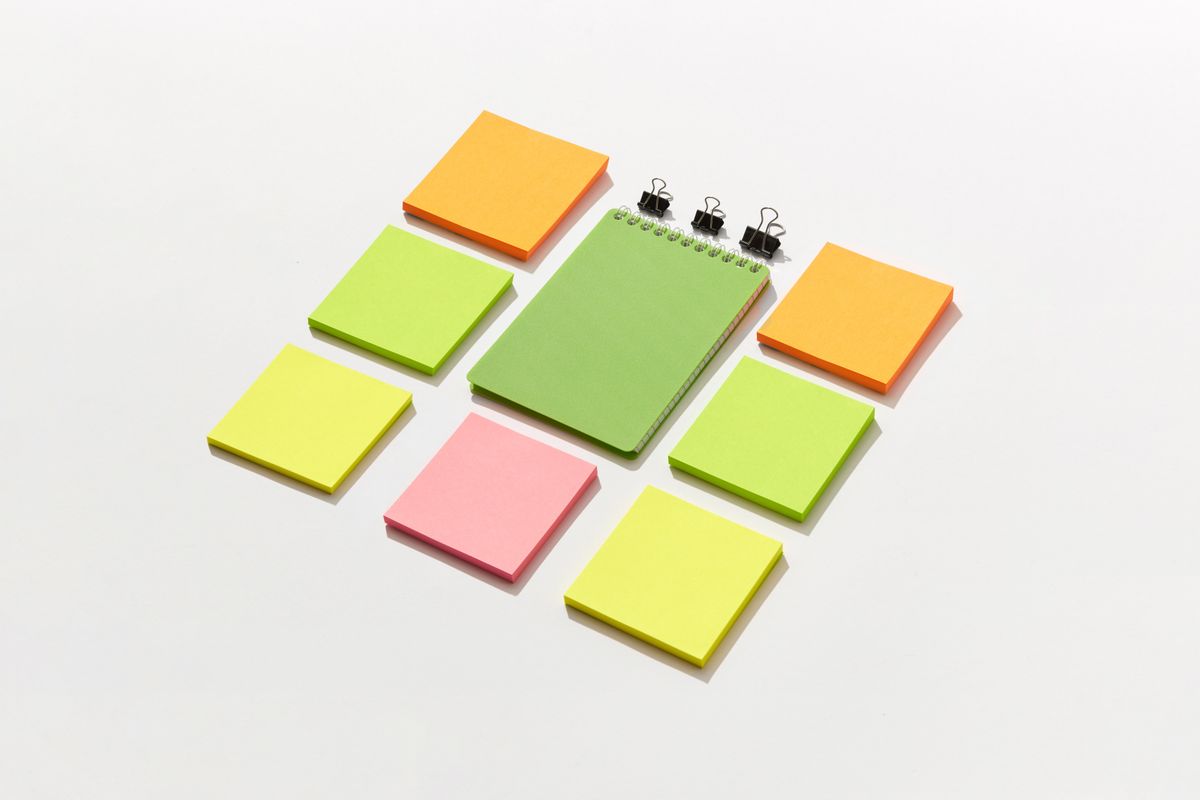
Look at how the binding behaves on a desk. Some books lie comfortably open; others need a hand to hold the page flat. Spiral bindings allow pages to fold back, but the wire can catch in a bag. A sewn or glued binding has different strengths and limitations. Handle a sample if possible instead of choosing solely from the number of pages.
If only a few pages need rearranging, a bound notebook with a rear pocket may be enough. Keep the main sequence intact and file the occasional printout separately with a short reference in the notebook. If most pages need moving, forcing them into a bound book will probably create repeated copying.
You can also use both formats for different stages: a small bound book for notes taken away from the desk, and a project file for selected information that must be retained. Make the transfer selective. Copy decisions, measurements and outstanding actions when needed, not every sentence simply to keep two complete versions of the same record.