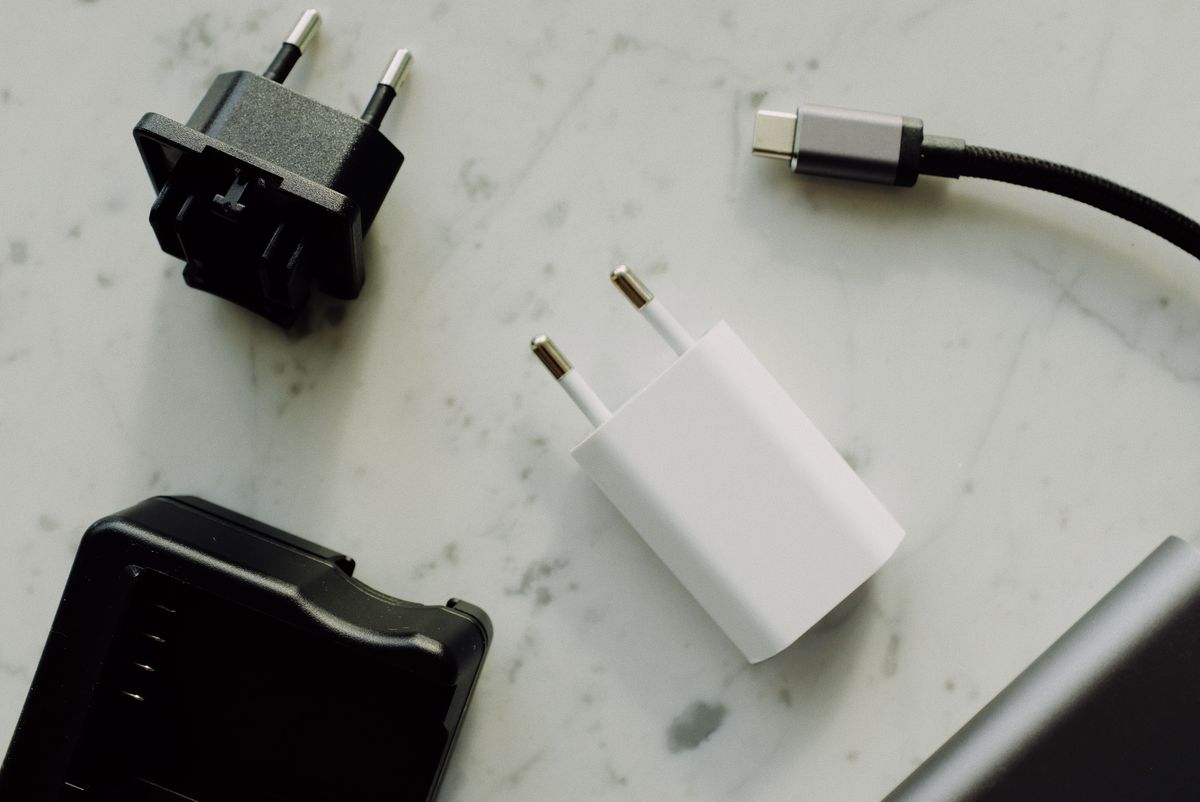
A drawer full of adapters often contains several answers to old problems and one answer to today's problem. The difficulty is telling them apart. A small amount of labeling does more good than adding another pouch to an already unexplained collection.
Empty the collection onto a clear surface and identify each item before deciding where it belongs. Read model numbers and markings. Separate charging adapters, display adapters, data adapters and proprietary parts. Put anything uncertain in a temporary review group rather than guessing its function from the connector alone.
Keep the cable with an adapter when they are routinely used together. A display adapter and its short cable can share a small compartment, while a rarely used camera lead belongs elsewhere. Group by destination or task where that is clearer: meeting-room display, external drive, or travel charger. There is no need for a classification system more elaborate than the collection.
Label the capability that is easy to forget
Two USB-C cables may have different data and power capabilities. Two similar display adapters may work in opposite directions. A label saying which computer and display a verified combination serves can prevent repeated trial and error. Avoid labels that imply broader compatibility than you have actually established.
Use loose coils and reusable ties for cables. Do not fold them sharply to force them into a compartment, and protect protruding connectors from heavy items. A shallow divided box can make small adapters visible; a deep bag tends to return them to a pile.
Make one travel set only if it saves real packing effort. Keep it complete, with the charger and cables needed for the equipment you actually carry. Borrowing from it every day defeats its purpose. If duplicate items are unnecessary, a short packing list can achieve the same reliability without another purchase.
Review the collection when a device leaves the household or office. Its proprietary adapter may need to go with it. Recycle damaged or obsolete electronics through an appropriate route, and do not keep a damaged charger as an emergency spare. The result should be a small collection of known connections, not a more attractive container for unidentified ones.