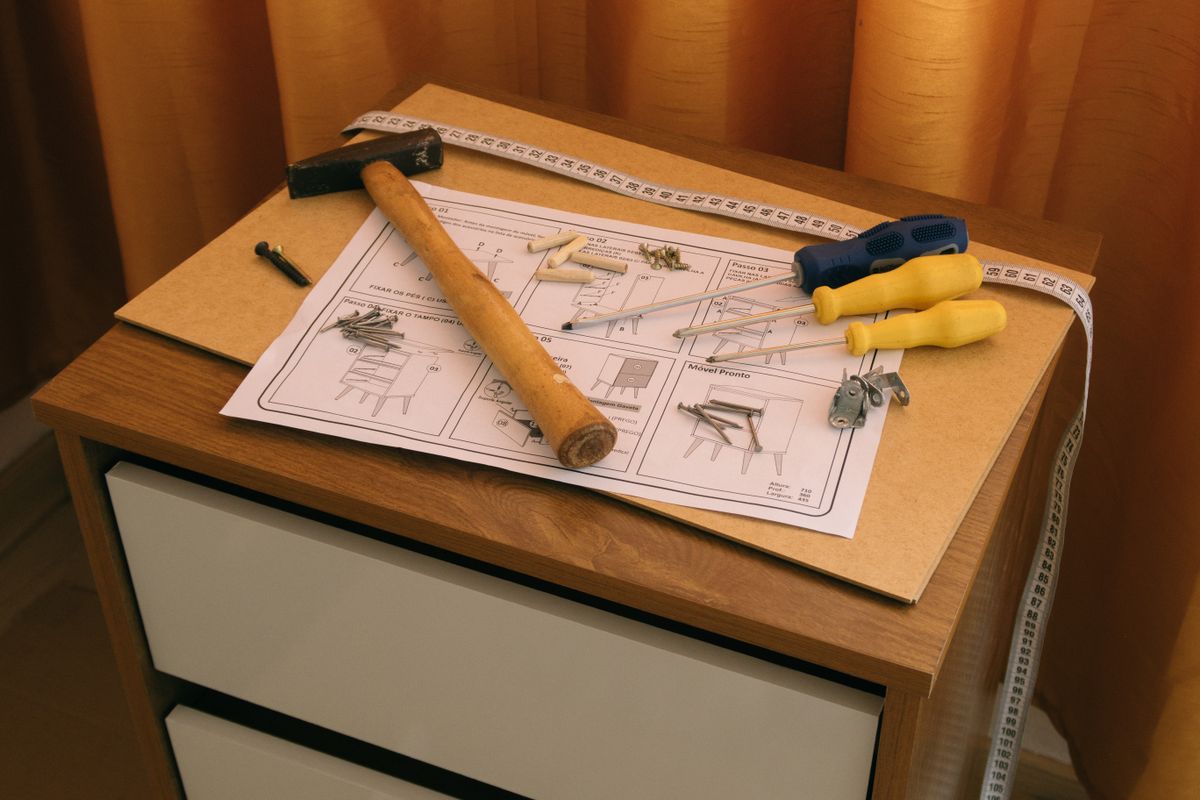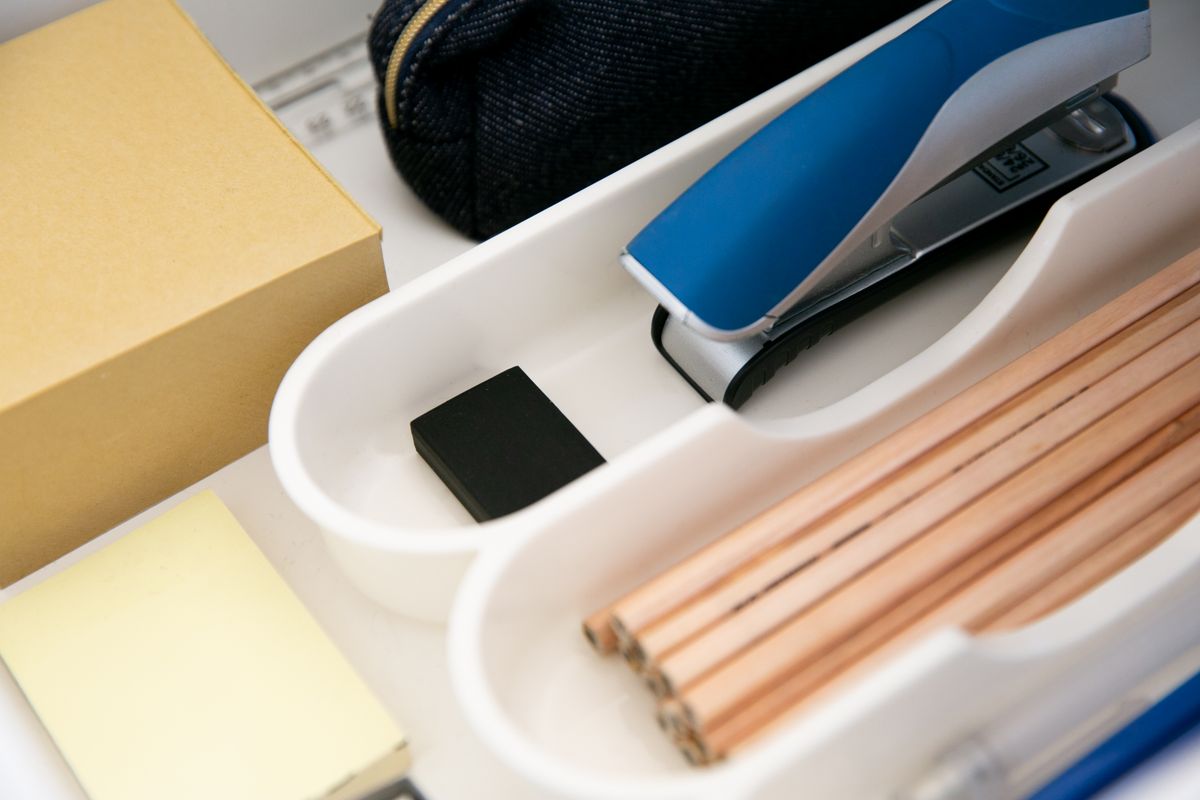
A shallow drawer can be a good place for pens, clips and small cables because its contents stay visible. It becomes less useful when an organizer consumes most of the height or divides the space into compartments too short for the objects. Measure the inside before choosing the insert.
Use the clear internal width and depth, including any curved sides or projecting hardware. Check the height available when the drawer closes, not just the height of its front. An item can appear to fit while the drawer is open and then catch against the frame above it.
Lay out the objects that actually belong there. A pen, ruler, small stapler and spare cable occupy different shapes. Leave long items together along one edge rather than forcing each into a miniature compartment. Keep frequently used pieces toward the area that is easiest to reach when the drawer is only partly open.
Separate only what needs separating
A low tray can keep paper clips from spreading without dividing the entire drawer. A loose pen compartment does not need individual slots unless they serve a particular purpose. Too many small sections create unusable gaps and make it harder to accommodate a replacement tool of a different size.
Consider a removable container for items that travel to the desk. If a small set of stationery is used together, lifting out one tray is easier than retrieving several objects. Make sure the tray remains easy to grasp and does not scrape the drawer sides.
Avoid stacking a second layer over the first merely because it physically fits. Hidden layers bring back the searching problem that a shallow drawer normally solves. Store bulky reserves elsewhere and use the drawer for the small working quantity. Loose batteries and metal objects need appropriate separate storage; follow battery packaging and safety guidance rather than mixing them with clips and keys.
Before filling the drawer, check its rated capacity and movement. Do not let an organizer interfere with runners, stops or locking mechanisms. A heavy collection of tools may belong in storage designed for that load rather than an office drawer intended for stationery.
Live with the arrangement for several days before making every divider permanent. If one compartment repeatedly overflows while another stays empty, move the boundary or remove it. The point is to make familiar objects easy to return, not to preserve a perfectly symmetrical layout.