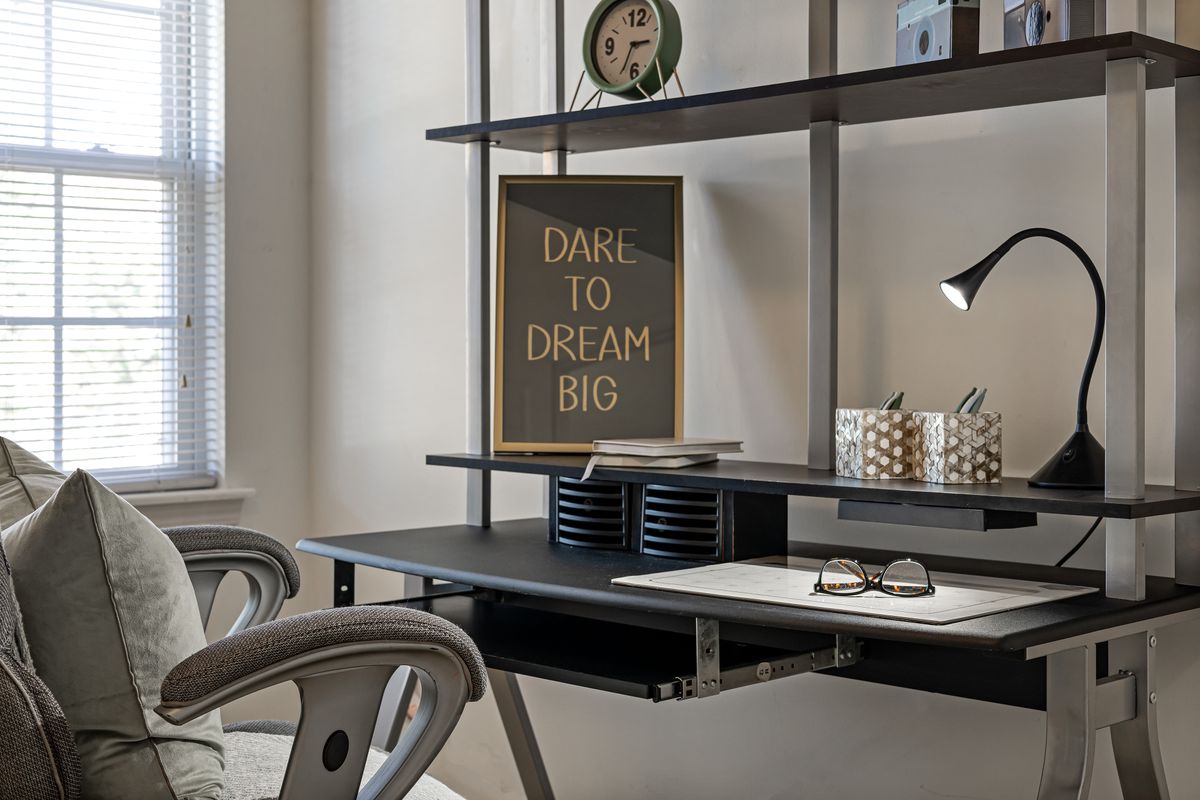
Open shelves make contents easy to see. Closed cabinets make a room easier to look at when the contents are less orderly. Neither is automatically the better office-storage system. The useful distinction is between material that benefits from being visible and material that benefits from being protected or concealed.
Frequently consulted reference books and clearly labeled project files can work well on open shelves. You can see what is missing and retrieve it without opening a door. Small loose supplies are less cooperative. A row of half-open packets may be technically accessible while making the shelf difficult to scan.
Containers can bring order to an open shelf, but they change its convenience. If every item requires lifting down a lidded box, the shelf is no longer offering immediate access. Use open bins for suitable everyday supplies and closed containers where dust protection or organization matters more.
What a door adds
A cabinet door hides visual clutter and offers some protection from settling dust. A lockable cabinet can also support controlled access, although the level of protection must suit the contents. Ordinary furniture doors do not make records fireproof, waterproof or secure against every kind of access.
Doors require working space. Measure their swing and check whether they collide with a desk, chair or neighboring cabinet. Sliding doors avoid a swing but may allow access to only part of the cabinet at once. Drawers create a different projection into the room. Try the actual retrieval movement rather than comparing closed dimensions alone.
Deep cabinets can encourage a second row of forgotten supplies. If items are small, shallower storage or fitted organizers may be more useful. Leave labels visible from the normal viewing height, and keep heavier contents low enough to handle appropriately.
A mixed arrangement can be simpler
One open shelf for active files and a closed cabinet for reserve supplies may suit the work better than choosing a single system for everything. Keep the categories understandable. A box of spare envelopes does not need the same position as the folder opened several times a day.
Whichever style you choose, follow the furniture's load and anchoring instructions. A closed door does not prevent tipping, and a visually light open shelf still needs suitable support. CPSC recommends securing furniture as directed, particularly where children may climb.
Choose the arrangement that remains legible when it is in ordinary use. If open shelves look orderly only after hiding half the contents elsewhere, closed storage may be more honest about what the room needs.