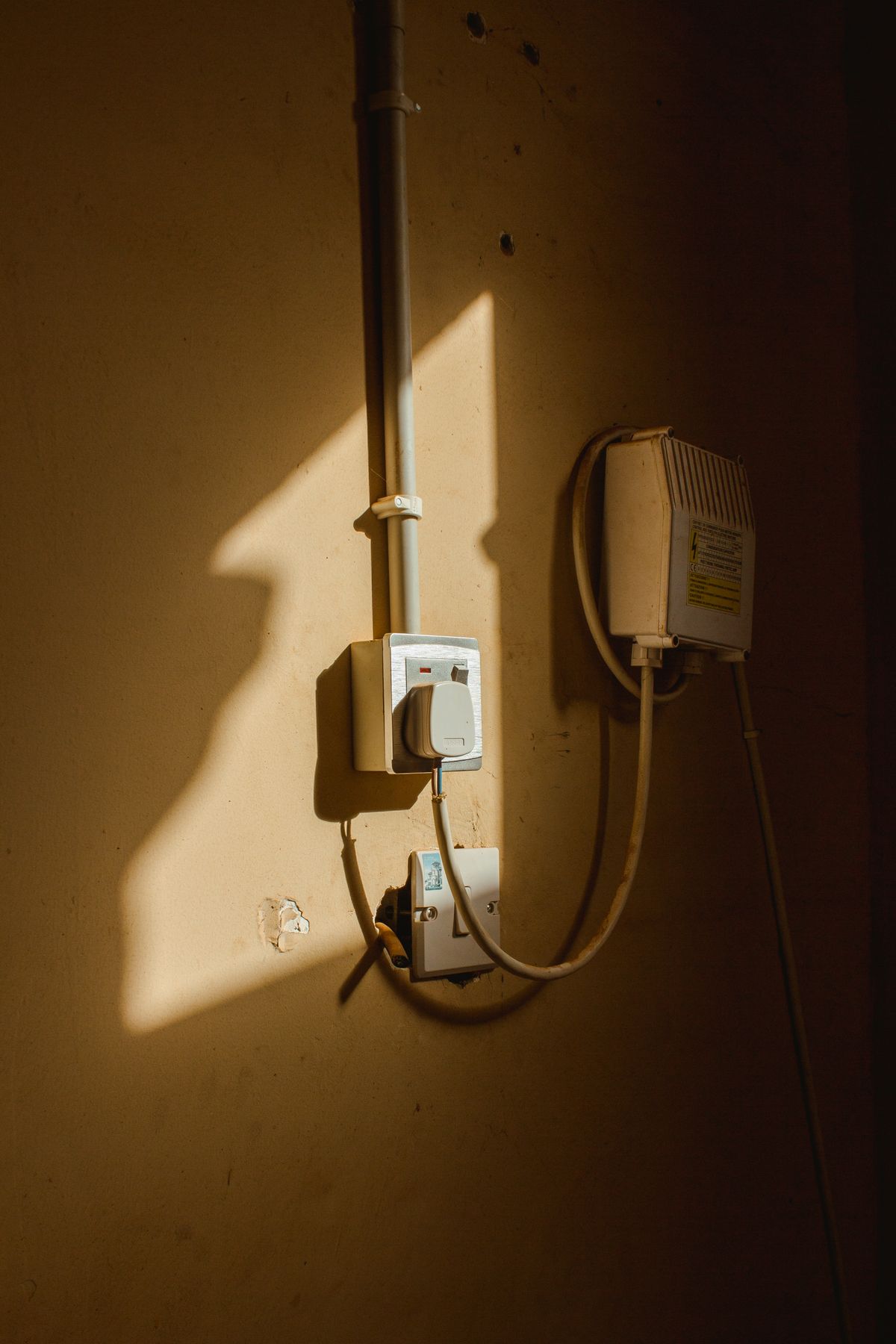
The outlet behind a living-room chair may already serve a lamp, a phone charger and a household device. Adding an office desk nearby changes that small area into a shared electrical point. Begin by identifying what is connected, including equipment that is usually hidden. The number of available holes does not tell you the capacity of the outlet, power strip or circuit.
Read the equipment labels and the instructions for any power-distribution product. Devices with similar plugs can draw very different amounts of power. A computer display is not equivalent to a space heater or another high-demand appliance. Follow product restrictions rather than deciding that everything is safe because it turns on.
Place the desk where the route stays ordinary
The useful position lets cords reach without crossing a doorway, running beneath a rug or being pinched behind furniture. Leave plugs accessible enough to remove safely when required. A bulky adapter may prevent an adjacent socket from being used; do not force plugs sideways or add an unstable stack of adapters to compensate.
A listed power strip can provide a suitable connection arrangement for permitted equipment when used within its limits. Plug it directly into the appropriate wall receptacle as instructed. Do not connect one strip to another. Extension cords are temporary solutions, not a replacement for permanent wiring where the desk will remain.
If the room genuinely lacks sufficient suitable outlets, ask a qualified electrician about a permanent solution. Moving the desk to another available location may also be simpler than trying to route power across the room. This is particularly relevant in a rental, where any installation needs the required permission.
Keep shared use predictable
Agree which devices belong at the outlet. A spare socket that later acquires a heater or other high-demand appliance can change the arrangement substantially. Labels can identify a computer connection that should not be unplugged casually, but labeling does not make an overloaded setup acceptable.
Keep the area open to inspection. Do not hide adapters inside a tightly closed decorative box unless the product is specifically designed for that use and all ventilation requirements are met. Dust, damaged insulation, loose connections or unusual heat should be easy to notice. Stop using damaged or suspect equipment and have the issue addressed.
There is also a practical benefit to a modest setup: fewer unnecessary chargers and adapters mean fewer things to move during cleaning. Keep only the connections the work corner actually needs. The result should look and behave like a planned electrical arrangement, with a clear route and accessible plugs, rather than a growing collection of workarounds.