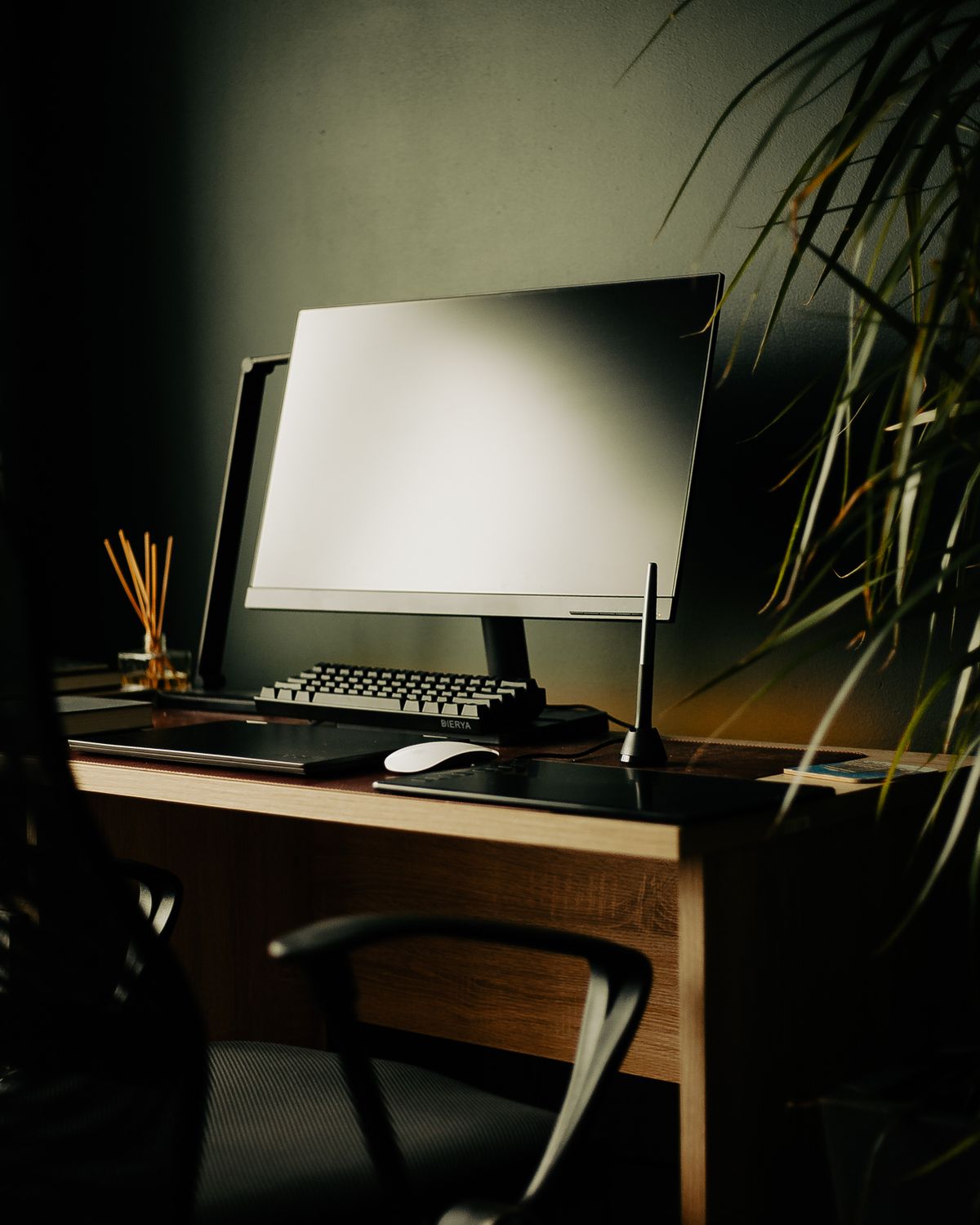
A windowless corner or a room facing a shaded courtyard can still support ordinary desk work. The challenge is providing usable light across the room and at the task, without relying on the monitor as the main light source. Begin with what needs to be seen: the screen, printed pages, controls, storage and the route into the room.
An overhead fixture may illuminate the room but leave the desktop in your shadow. A desk lamp can solve that local problem, although it may leave the surroundings noticeably dark. Combining ambient room light with adjustable task lighting gives more control over both conditions.
Aim the light where the task happens
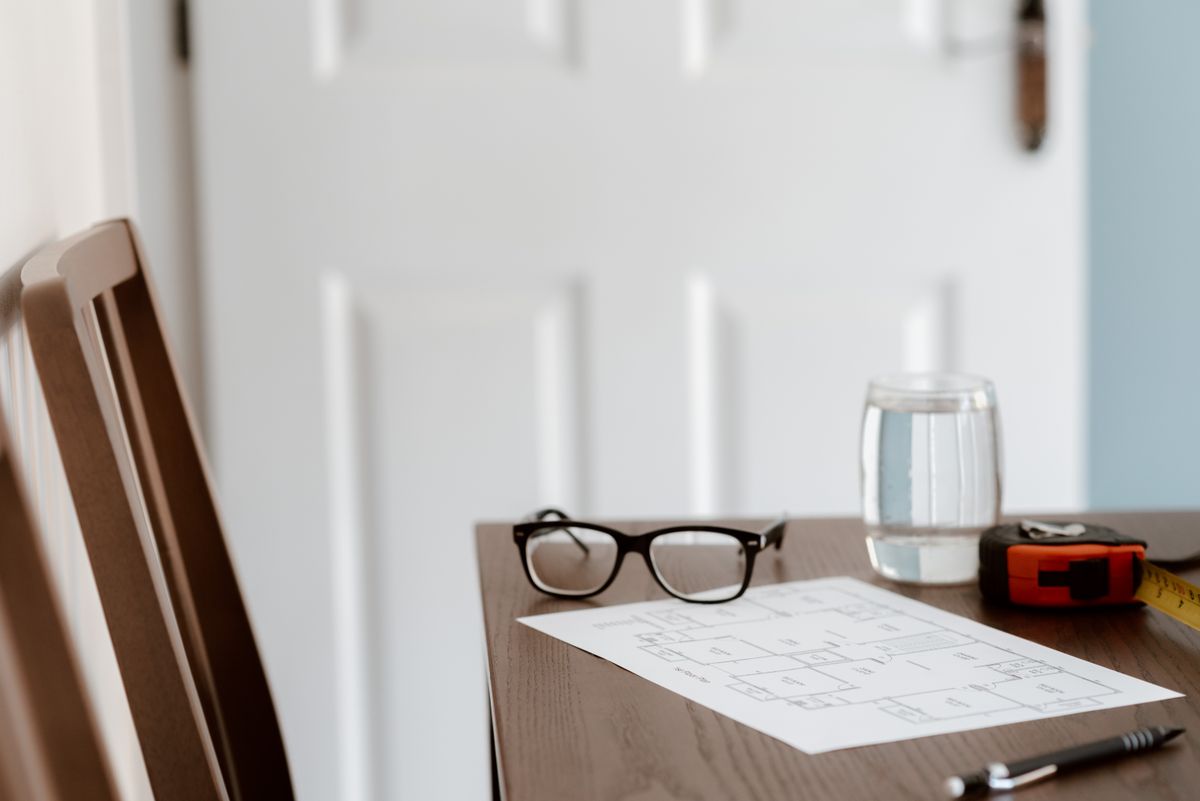
For paperwork, place the lamp so that the writing hand does not cast a heavy shadow over the page. For screen work, keep bright light out of the direct viewing direction and away from angles that reflect on the display. A shaded or diffused source is often easier to position than a bare bulb.
Use a familiar document as the test. Read it on screen, write a note and look toward a nearby shelf. If one transition feels unnecessarily stark, adjust the balance of light rather than simply increasing every lamp's brightness. Screen brightness and text size can be changed independently.
Check lamp specifications and use only compatible bulbs within the fixture's limits. A dimmable bulb requires a compatible dimmer and fixture; the word dimmable on one component does not establish compatibility for the entire arrangement. If a light flickers or behaves abnormally, resolve that issue rather than accepting it as part of the room.
Make the room easy to use at any hour
Put the first useful light on a switch reachable from the entrance. Place frequently used materials where labels can be read without holding them directly under the desk lamp. Light-colored matte surfaces may distribute light differently from dark glossy ones, but repainting is not a prerequisite for testing a better lamp position.
Keep ventilation separate from lighting decisions. A small enclosed room should retain the ventilation required for the space and the equipment in it. Do not cover a grille with storage because it is the only convenient wall.
A decorative light can make the corner pleasant, but it should not be mistaken for the task lighting needed to read and work. Likewise, a product marketed as daylight is not a substitute for checking glare, stability and control.
Once the arrangement works, keep the useful settings easy to repeat. The advantage of a low-daylight workspace is that its lighting can be predictable; use that consistency to make the screen and paper equally straightforward to see.